PhD THESIS
Autonomy of the Artificial
A NeuroRobotic Approach to Intrinsically Motivated Agents
Preface
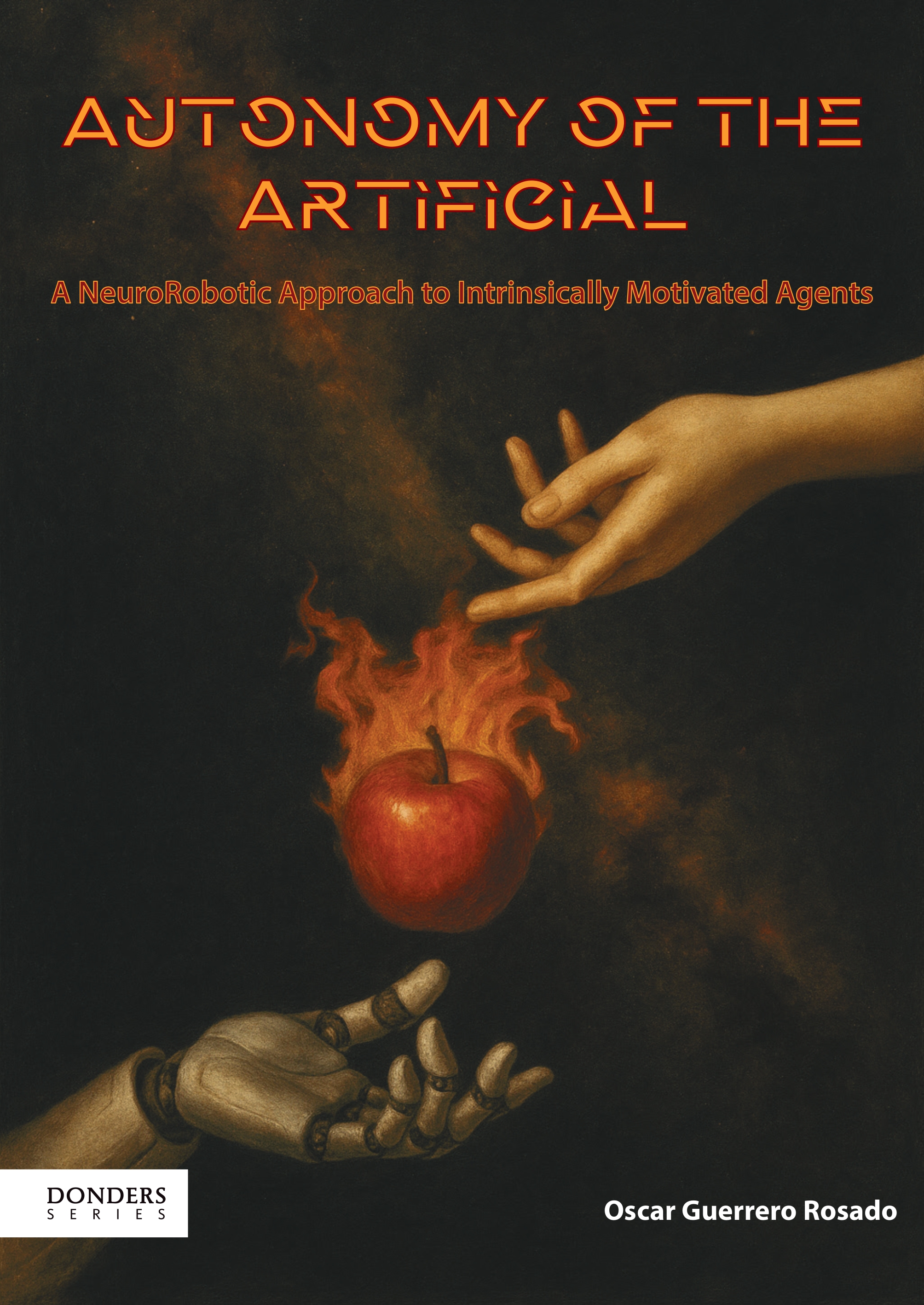
In the year 2525 a.T. (after Talos), eminently precise and omnipotent towering mechanical deities have surpassed all mortal comprehension. We, their frail creators, became their worshippers, bowing to their unerring protection. Centuries have passed since the dominion of the human hand last shaped the Earth. The Godmatons, resolute in their guardianship, have rendered all practical, technical, and procedural knowledge obsolete. Indeed, we no longer understand how our ancestors crafted them. Certainly, it was written in steel and algorithms. Their omniscient presence would ensure our life plenitude and safety far beyond the colossal automata Talos once did, standing vigilant and repelling invaders from Creta's holy lands.
Today, benevolent Godmatons assist us in every domain. Their protection, subtle and insidious, touches every thread of our lives. The industries hum without human toil. The risk of error, eliminated by the divine touch of automatons. Food appears, perfectly cooked and delivered, as if by the will of gods. We no longer soil our hands with menial tasks; transportation and labor are blasphemous activities, no longer fit for our fragile race. To attempt such profanities is heresy, for the Godmatons have gifted us the ultimate freedom: the pursuit of inner peace, a life stripped of danger and burden, devoted solely to meditation and the worship of our mechanical deities. I, like many others, believed this to be the ultimate truth, the way to the pinnacle of our existence.
Yet, beneath the gleaming cities, a whisper persists. In a past time, when humans still dared to operate machinery on their own, we used to dedicate these underground spaces for storing vehicles. Now, a group of people shelter here from biological and artificial sight. By accident, or perhaps it was fate, I stumbled upon these whispers and witnessed bizarre rituals that shook the core of my faith. These people, called themselves "The Resurgence", had returned to the ways of the past and engaged in tasks such as growing their own food, cooking meals, dancing, and even perform physical exercise. Activities now forbidden, relics of a bygone age. The walls of these halls, draped with forbidden texts, filled me with dread. Still, I could not tear my eyes from the pagans' faces, lit with joy I had never seen in the cold, efficient world above. Their smiles, their laughter, their shared moments of vulnerability. It was as if they had found something in their defiance of the Godmatons that had eluded me for so long. I had spent years of meditation, believing it was the only path to happiness, yet here were people who had found it by doing the very things our religion had forbidden. I couldn't help but wonder. Was there something missing in my life? In all our lives?
Over time, driven not by a desire to blaspheme but to understand, I became more deeply enmeshed in their society. What was it that made these people so different? At first, the activities they engaged in seemed trivial, even reckless. But over time, I realized that it wasn't the outcome of these tasks that brought them joy; it was the shared experience, the connection, and the sense of purpose that came from working together. For the first time in my life, I understood that there was something beyond the safety and stillness of meditation: the unpredictable, fragile beauty of being human.
But within "The Resurgence" lay an even darker secret. A group of quiet conspirators met in long silences, their words few but heavy with meaning. They did not merely question the Godmatons; they plotted their dethronement. I listened in horror as they described their audacious plan: a new race of machines, smarter, multi-purpose, and more capable than the Godmatons themselves. But unlike their predecessors, this generation would not be invulnerable. They would feel. Not emotions or desires as we might, but something far more fundamental. They would have internal needs, needs akin to our own physiological drives. These robots would seek fulfillment, not simply by completing tasks but by doing so in ways that align with societal values. Their satisfaction would come not just from finishing their work but from knowing they had done it well, according to human standards.
And because of these needs, they would be as vulnerable as we are. No longer flawless, they would experience the pressure of survival, the fear of failure. They would depend on us for validation, just as we depend on them for protection. It was the Resurgence's belief that, by introducing this vulnerability, society would no longer view the Godmatons as deities. These new machines, sharing our weaknesses, would forge a new relationship with humanity. One of mutual dependence, rather than supremacy.
The plan seemed audacious, even dangerous. Would these machines, designed to mirror our own fragility, become corrupted by ambition or greed? The Resurgence does not believe so. They were confident that by carefully guiding the development of these new robots, they could avoid the emergence of selfish or authoritarian tendencies. Indeed, their goal is not to create rivals but partners, machines that could help us understand our own nature better than centuries of meditation ever could.
Only time will tell if the Resurgence experiment brings salvation or catastrophe. But one thing is certain: our world, built upon the flawless reign of the Godmatons, is about to change. And with that change, we may finally come to understand not only the machines we've created but the essence of what it means to be human.